

7 Self-Trust Exercises to Rebuild Confidence in Your Decisions
If you are searching for self trust exercises, you may already know how tiring it feels to question yourself after every choice. Self-trust can be rebuilt by making small decisions, keeping realistic promises, recording evidence of sound judgment, naming your needs, reducing unnecessary reassurance and reviewing choices fairly. The goal is not perfect certainty. It is learning that you can make a reasonable decision and respond when circumstances change.
Self-trust may weaken after criticism, pressure, burnout, difficult relationships or painful choices. These seven exercises will help you practice judgment, follow-through, boundaries and adjustment without pretending uncertainty disappears.
Quick Answer: Self-trust grows when you repeatedly show yourself that you can notice your needs, choose thoughtfully and adjust when needed. Start with manageable decisions, keep one small promise to yourself and review the result without turning every imperfect outcome into proof that your judgment is broken.
Readers who want structured guidance can explore Yolanda’s personal growth and recovery support. The 7-Day Reset also offers a gentle starting point for reflection, clarity and rebuilding trust in your next steps.
What Is Self-Trust?
Self-trust means having reasonable confidence that you can notice your feelings and needs, consider available information, make a decision, communicate a limit, take action and learn from the result.
Self-trust does not mean you are always right. It does not mean you never ask for feedback, act on every feeling, ignore evidence or treat intuition as a complete decision-making system. A person with self-trust can listen to advice and still stay connected to her own judgment.
Is Self-Trust the Same as Self-Worth?
No, although they can influence each other. Self-worth is about personal value and deserving respect, care and support. Self-trust is about confidence in your judgment, needs, decisions and follow-through.
A woman may value herself and still second-guess every choice. Another woman may look decisive on the outside while depending heavily on approval from other people. If the deeper issue is feeling unworthy of care or respect, Yolanda’s article on rebuilding self-worth after a difficult season is a separate and helpful place to continue.

What Can Weaken Self-Trust?
Self-trust can weaken when your feelings are repeatedly dismissed, your needs are punished or your choices are criticized more than they are understood. Perfectionism can add another layer, because one imperfect choice starts to feel like evidence that you should not choose at all.
Burnout, prolonged pressure, painful decisions, controlling relationships, constant comparison and reassurance loops can also make your own judgment feel unsafe. Sometimes the pattern is subtle. You ask three people for input, delay a choice, feel temporary relief and then feel less capable the next time.
Avoidance may feel protective in the short term, but it can reinforce doubt when you never get to practice manageable decisions. The NHS offers guidance on rebuilding confidence and challenging negative beliefs, which is related to self-esteem and confidence. It is not a complete self-trust method, but the idea of challenging harsh beliefs and taking manageable steps fits this work.
7 Self-Trust Exercises
These self-trust exercises are practical on purpose. They are not affirmations you repeat while ignoring your life. They are small ways to gather evidence that your judgment can be used, reviewed and adjusted.
1. Make One Low-Risk Decision Without Asking for Reassurance
Begin with a decision where the consequences are manageable. Choose what to eat for lunch, which task to complete first, what to wear, when to take a break or whether to accept a nonessential invitation.
- Identify the decision.
- Write two or three relevant facts.
- Choose without polling several people.
- Act on the choice.
- Review the result later without insulting yourself.
Use this script: “I have enough information to make this small decision.” This exercise is not for high-risk medical, legal, financial or safety decisions. Expert advice is appropriate when a decision requires expertise. The goal is to reduce unnecessary reassurance, not eliminate useful advice.
2. Keep One Small Promise to Yourself
Self-trust can weaken when you make promises that are too big for your actual capacity, then treat the missed promise as a character flaw. Choose one commitment that is specific, small, realistic, within your control and time-limited.
You might stop working at a set time once this week, drink water before your next meeting, take a ten-minute walk, write one paragraph, decline one optional task or put your phone away for fifteen minutes. If work pressure is part of the pattern, Yolanda’s article on creating more sustainable ways to work under pressure can help you think about performance without simply pushing harder.
Start smaller than pride may prefer. Consistency builds better evidence than dramatic promises. If you miss one commitment, adjust the size or timing instead of punishing yourself.
3. Create a Personal Evidence Log
Second-guessing often remembers mistakes and forgets sound judgment. A personal evidence log helps you notice moments when you did respond well, even if the outcome was not perfect.
Use five short columns: Situation, What I noticed, Decision I made, What helped and What I learned. Evidence can include recognizing that rest was needed, asking a useful question, delaying a rushed response, saying no, seeking expert advice, leaving an unhelpful situation or correcting a mistake.
Keep the log factual. You are not trying to prove you never struggle. You are teaching your mind to see a fuller record than failure alone.
4. Separate the Decision From the Outcome
An outcome can be disappointing even when the decision process was reasonable. A difficult outcome does not automatically mean the original decision was careless. Other people may change their behavior, timing may shift, new information may appear or outside conditions may affect the result.
Review the choice by asking: What did I know at the time? What need, value or limit mattered? What was outside my control? What became clear later? This keeps accountability without turning every outcome into a trial against your identity.
5. Practice Naming What You Need Before Asking Others
Before asking someone else what you should do, pause and name your need first. You may need rest, clarity, safety, time, support, fairness, privacy or a practical next step.
Instead of asking, “What should I do?” try, “I need more recovery time, but I am concerned about the deadline. Can you help me compare the practical options?” This allows support without handing over your own inner information. Yolanda’s guide to setting boundaries without ignoring your own needs can help when the decision involves limits, guilt or relationship pressure.
Yolanda’s Digital Guides offer practical tools for reflection, recovery and personal growth. RESET Under Pressure™ may also help readers slow down, assess what matters and respond more deliberately during demanding situations.
6. Use a Decision Deadline
Some decisions stay open because uncertainty feels uncomfortable. A decision deadline gives your mind a clear container. It does not force recklessness. It simply prevents endless review when no meaningful new information is arriving.
- Define the decision clearly.
- Set a reasonable deadline that reflects the seriousness of the choice.
- List the most relevant facts.
- Identify what information is genuinely missing.
- Decide when enough information is available.
- Make the choice.
- Reopen the decision only when important new information appears.
Try this script: “I will decide by Friday using the information available. I will reopen the decision only if something important changes.” If you tend to loop through the same possibilities for hours, Yolanda’s article on how to stop overthinking a decision may support this exercise.
7. Review Decisions With Curiosity, Not Punishment
Set aside a few minutes each week to review one decision. Ask what information you used, what you handled well, what you missed, what was outside your control, what the result taught you and what adjustment would help next time.
The goal is not to prove every choice was correct. The goal is to build confidence that you can reflect, take responsibility, repair, adjust and try again. If writing helps you process emotions clearly, Yolanda’s guide to journaling for clearer emotional reflection may be a useful companion.
Self-Trust Exercises at a Glance
| Exercise | What It Builds | Small First Step |
|---|---|---|
| Low-risk decision | Independent judgment | Choose without polling others |
| Small promise | Follow-through | Keep one ten-minute commitment |
| Evidence log | Balanced self-review | Record one sound decision |
| Decision versus outcome | Fair accountability | Note what was known then |
| Name your needs | Internal clarity | Write one need first |
| Decision deadline | Decisiveness | Set a time to choose |
| Curious review | Learning and adjustment | Review without insults |
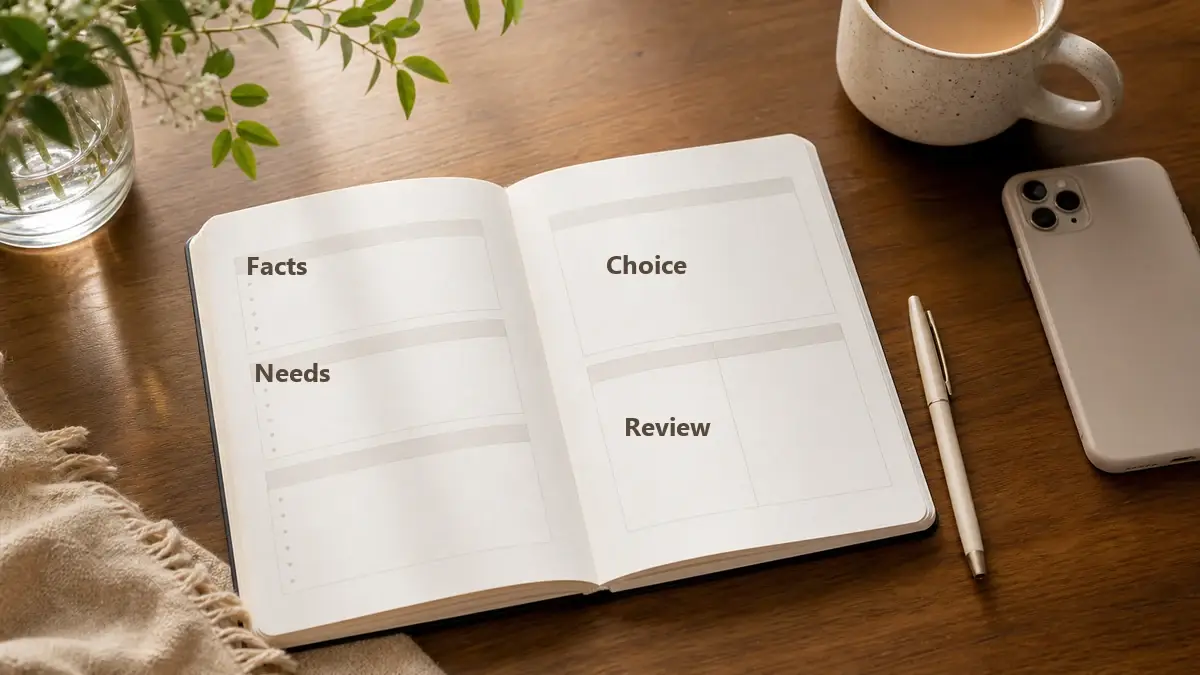
Try This Self-Trust Decision Review
Try This Now: Use this worksheet when a decision feels difficult to organize clearly.
- DECISION: What decision am I making?
- FACTS: What do I know?
- UNCERTAINTIES: What remains unknown?
- NEEDS: What need, value or limit matters here?
- SUPPORT: Do I need information, reassurance or qualified advice?
- CHOICE: What is the most reasonable next step?
- REVIEW DATE: When will I review the result?
- ADJUSTMENT: What will I do if circumstances change?
Self-trust does not require certainty. It requires a reasonable decision and confidence that you can respond to what happens next.
This is a reflection exercise, not professional, legal, financial or medical advice. Use qualified support when a decision carries serious health, safety, legal or financial consequences.
How to Stop Asking Everyone Else What You Should Do
Support is healthy. Polling everyone because you are afraid to stand beside your own choice is different. Before asking for advice, write down your view first. Then choose one qualified or trusted person instead of opening the decision to every opinion available.
Try to separate information from permission. Instead of saying, “Tell me what to do,” try, “Here is what I am leaning toward and why. Is there any important information I may have missed?” You still receive input, but you practice keeping the final decision where it belongs when appropriate.
How to Trust Yourself After Making a Mistake
A mistake does not mean you should never trust yourself again. Rebuilding self-trust may involve naming what happened honestly, taking responsibility where appropriate, repairing harm where possible and identifying what information you ignored or did not have.
Accountability and self-trust can exist together. You can admit that a choice hurt, learn from it and make a smaller decision next. Yolanda’s article on how people learn to become more resilient may help if you are trying to understand what real-life challenges can teach without romanticizing the pain.
When You Should Not Rely Only on Self-Trust
Trusting yourself also includes knowing when specialized support is needed. Do not rely only on self-trust for medical symptoms, medication questions, legal disputes, major financial decisions, immediate safety concerns, abuse, workplace legal rights, immigration or visa decisions, severe emotional distress or decisions involving another person’s health or legal rights.
A wise decision may involve consulting a licensed or qualified professional. You can remain the decision-maker while using expert information. Self-trust is not the same as refusing feedback, evidence or support.
When Low Self-Trust May Need Professional Support
Consider professional support when second-guessing seriously affects daily functioning, prevents normal decisions, causes severe distress, connects to trauma or abuse, leads to repeated unsafe situations or affects sleep, eating, work or relationships. A qualified professional can assess what is happening without turning your self-doubt into a personal failure.
If low self-trust comes with persistent hopelessness, thoughts of self-harm or distress that does not improve despite reasonable self-help efforts, support matters. If you may harm yourself, cannot stay safe or are in immediate danger, contact local emergency services or an available crisis service immediately.
Self-Trust Is Built Through Practice, Not Perfection
Self-trust does not mean every choice will work out the way you hoped. It means you can make a thoughtful decision, notice your needs, keep realistic commitments, ask for useful advice and adjust when new information appears.
Small decisions create evidence. Fair reviews build perspective. Boundaries help you stay connected to your own limits. Over time, you are not trying to become a person who never doubts herself. You are becoming a person who can move with more steadiness, even when certainty is unavailable.
Frequently Asked Questions
Self-trust exercises are small practices that help you rebuild confidence in your judgment, needs, decisions and follow-through. They may include making low-risk choices without reassurance, keeping realistic promises, recording evidence of sound judgment, naming your needs and reviewing decisions fairly. The goal is not to become perfectly certain. It is to build evidence that you can choose, learn and adjust.
Start with decisions where the consequences are manageable. Write down the facts, name what you need, choose without polling several people and review the result later. Trust grows when you see that you can make a reasonable choice and respond if something changes. For higher-risk decisions, qualified advice can be part of trusting yourself wisely.
To reduce second-guessing, pause before asking for reassurance and write down your own view first. Set a decision deadline when enough information is available. Ask one trusted or qualified person for specific input instead of collecting many opinions. Then review the choice fairly, including what was outside your control.
Yes, self-trust can be rebuilt after a mistake, but it usually requires honesty rather than denial. Name what happened, take responsibility where appropriate, repair what can be repaired and identify what you want to do differently next time. A mistake does not erase your ability to learn, adjust and make smaller sound decisions again.
Low self-trust should be discussed with a professional when it seriously affects daily functioning, creates severe distress, prevents normal decisions, connects to trauma or abuse or affects sleep, eating, work or relationships. A qualified professional can assess what is happening. If you may harm yourself, cannot stay safe or are in immediate danger, contact local emergency services or an available crisis service immediately.
This article is for education and encouragement only. It is not medical advice. If stress, burnout, anxiety, trauma, depression, or emotional distress is affecting your health, safety, sleep, work, relationships, or ability to function, please consider speaking with a licensed medical or mental health professional.
Build Confidence in Your Next Step
Rebuilding self-trust does not require one perfect decision. It grows through small choices, honest reflection and the confidence that you can respond when circumstances change.
You can learn about Yolanda’s approach to resilience, recovery and personal growth. You can also explore Yolanda Dean’s resilience and personal growth guidance for more support. If you are rebuilding after a painful season, 10 Ways to Heal and Recover offers practical encouragement for the next step.